Forty versions of one question
"How much for a sleeve?" lands in the DMs, the shop email and the voicemail on the same afternoon. Answering each one properly takes about six minutes of typing and a second look at your calendar.
4 hours a weekConsultation intake for custom work
StencilIntake turns your booking link into a real consultation sheet: reference photos, body placement, size in inches, existing coverage, healing history and a budget band, all attached before the message reaches you. The deposit is collected on the same sheet, and aftercare goes out on its own schedule once the piece is wrapped.
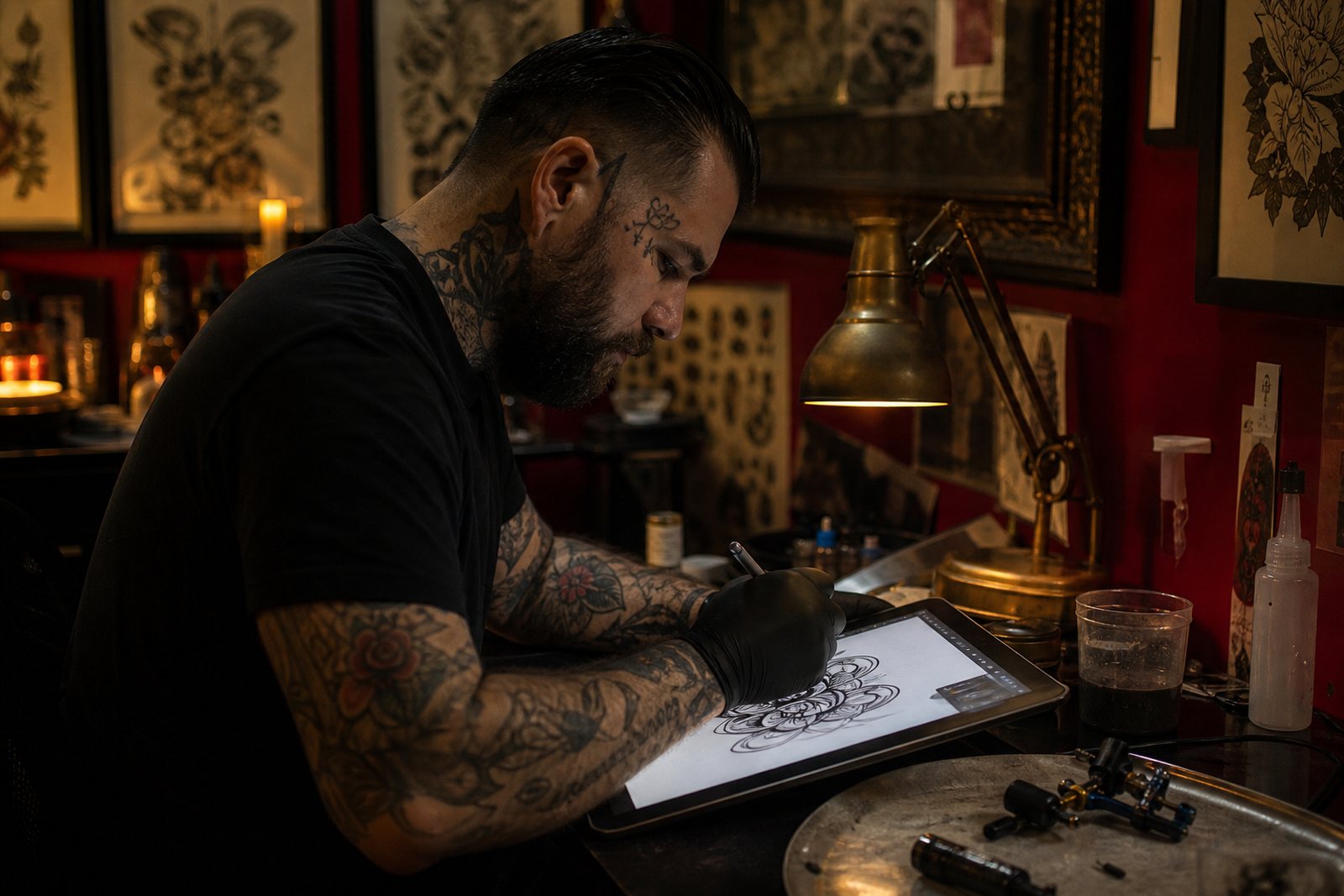 Sheet 01
Every request arrives as a numbered sheet: references pinned, placement marked, budget on the record.
What the inbox actually looks like
Custom work arrives as a sentence and a shrug. Somebody wants a half sleeve, somebody wants a cover up over a name, somebody wants it Saturday. None of them told you the size, the spot, the skin they are working with, or what they can spend, and every one of those blanks costs you drawing time you never bill.
"How much for a sleeve?" lands in the DMs, the shop email and the voicemail on the same afternoon. Answering each one properly takes about six minutes of typing and a second look at your calendar.
4 hours a weekWithout a size, a placement and a reference set, the number you send is a guess. Guess two hours light on a long back piece and you eat the difference at the machine, because you already put it in writing.
$220 per bad guessA booked chair that never shows takes the whole block with it, and the walk in traffic you turned away does not come back. Booth rent does not pause because the client stopped answering.
$650 per empty blockHealing questions arrive at midnight, the same photo of a scab three times, and a touch up you never scheduled. Each avoidable touch up is ninety minutes of chair time you cannot sell twice.
90 minutes per touch upHow the sheet runs
StencilIntake replaces the open ended message with a structured sheet built around how custom work is actually quoted: reference, placement, size, skin, budget, deposit, aftercare. You write your rules once and the sheet enforces them on every request that comes in.
Drop the link in your Instagram bio, your shop site and the back of your card. Anyone asking about custom work fills the sheet instead of writing a paragraph, and your personal thread stays for friends and other artists.
Reference upload, placement on a body map, size in inches both directions, skin tone, coverage over existing work, medical flags and a budget band. Nothing submits until the required blocks are answered, so a half filled request never reaches you.
Pick a flat deposit or a percentage of the low end of the band, with your cancellation window printed above the payment block. The money settles to the shop account you already use and the amount is credited to the sitting.
Your healing instructions send on day one, day four and day fourteen in the client's own thread, in your wording. A week six photo request closes the file and quietly builds a gallery of healed work you can show the next client.
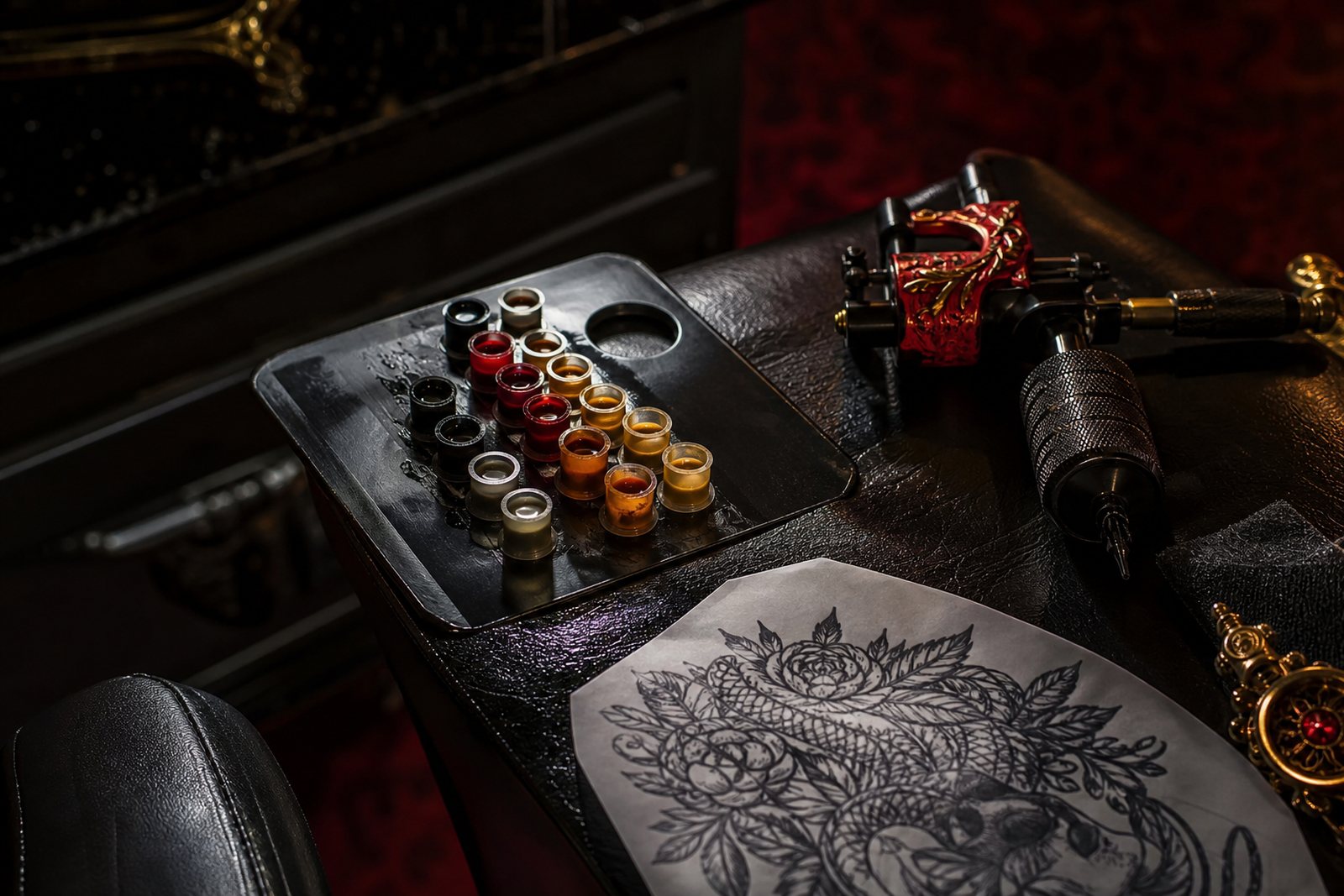
Shops running the sheet send the first real quote inside a day instead of trading messages for a week, because the reference set and the placement are already on the page.
What is inside the sheet
Every field in StencilIntake exists because an artist lost time or money without it. Nothing here is a generic booking form with a tattoo skin painted on top.
Clients attach up to twelve images and the sheet keeps them in one gallery with their notes on each frame. You read the whole reference set in a single pass instead of scrolling a thread for the one photo that mattered.
A front and back body map records the exact spot, and the size field asks for inches in both directions rather than a vague word like medium. Coverage over old work, stretch marks and scar tissue is a required answer.
The client picks a spending band before they ever see a number from you, so the conversation opens in the right range. Requests under your floor get the polite decline you wrote once, sent the moment they land.
Set a flat deposit or a percentage of the band low end, with your cancellation window printed directly above the payment block. Funds settle to the shop account you already bank with, and the amount is credited to the sitting automatically.
State consent wording, age verification and a medical flag list ride in the same submission as the artwork request. Every signed copy is stored against the sheet and exports as a dated file when your shop needs the record.
Write your healing instructions once and let them go out on day one, day four and day fourteen in the client's own thread. The week six photo request closes the file and fills a healed work gallery you can show the next person who asks.
What changes in the first quarter
These are the four figures artists bring up when they renew. Each one comes from the same place: the request is complete before you spend a minute on it, and the money question is settled before the stencil is cut.
The sheet answers size, placement and reference before you type a word. Shops go from roughly 41 inquiry replies a week to 12 that are actually worth a quote, and the other 29 handle themselves.
A deposit collected at submission, with the cancellation window printed above it, moves the average shop from a 14 percent no show rate to 3.1 percent inside two months of running the sheet.
Blocks that used to go dark get refilled from the waitlist the sheet has already built, and the average sitting value across the shops we measure is $460. Four saved blocks a month is the whole figure.
Timed healing instructions in the client's own thread beat a screenshot taped to the counter. Shops report about a third fewer free touch up appointments in their first year, which is chair time back on the calendar.
From the floor
Three shops, three very different books, one habit in common: nobody quotes a custom piece from a sentence anymore.
I used to burn Sunday night on people who wanted a forearm piece for eighty dollars. The budget band does that sorting for me now, before I ever open the sheet. Last month I quoted eleven pieces and nine of them booked with the deposit already down.
The placement map is the part I did not expect to care about. People say ribs and they mean the side of the stomach, and I was redrawing the wrong shape about twice a month. Since the sheet went live I have not cut a stencil for the wrong spot once.
Four artists, four different ways of taking a request, and I was the one chasing consent forms every week. Now it is one sheet and one folder, and the aftercare messages send themselves. My Mondays got about three hours shorter.
Plans
Pick the plan that matches how many people take custom requests in your shop. Every plan carries the full sheet: references, placement, sizing, budget bands, deposits and aftercare. Nothing important sits behind the top tier.
One artist, one public intake link
$25 per month
Up to six artists behind one front desk
$59 per month
Two rooms, guest chairs and a heavy book
$119 per month
Every plan is billed monthly in US dollars and can be cancelled at any time from your account screen. There is no setup fee, no annual contract, and your sheets, consent records and client list export whenever you ask for them.
Straight answers
If something below is still unclear, write to us and a person who has sat in a shop will answer you.
The price is per plan, not per artist. Single Artist covers one person at $25 per month, Studio covers six artists at $59 per month, and Studio Plus covers twenty seats across two locations at $119 per month. If your shop grows past a tier you can move up in the middle of a month and we prorate the difference. Deposits your clients pay belong to you and are never counted against the subscription.
Most artists finish in one afternoon between appointments. You write your budget bands, your deposit rule and your aftercare text, then paste the link into your Instagram bio and your shop site. Studios with several artists usually spend an extra hour setting per artist floors and the subjects each person declines. Studio Plus shops get a setup call with us if you would rather talk it through than type it in.
Reference images, signed consent and medical flags are stored against the sheet they arrived on, in encrypted storage hosted in the United States. Only artists on your account can open a sheet, and a studio manager can be given read access without edit rights. You can export a client file as a dated archive at any time, and you can delete a sheet permanently once your state record keeping period has run out. We do not sell client data and we do not use it to train models.
Confirmed sittings write straight into Google Calendar or Apple Calendar, so your day looks the same as it always did. Deposits settle into the business bank account your shop already uses, normally within two business days. The intake link drops into Squarespace, Wix, Linktree or any page where you can paste a web address, and there is an email handoff for shops that still work from a shared inbox. Monthly deposit reports export as CSV for whoever does your books.
You cancel from the account screen and billing stops at the end of the month you already paid for. Your intake link keeps accepting sheets until the last paid day, then it shows a short closing message that you write yourself. Before the account closes you can export every sheet, consent record and aftercare thread in one archive, and we keep that export available to you for thirty days. No cancellation fee is charged, and nobody rings you up to argue you out of leaving.
People who were going to book are glad to answer six questions, because it buys them a real number instead of a maybe. The ones who quit at the budget band were never going to sit in your chair on a Saturday. Shops that moved to the sheet report the same or slightly higher booking counts with a fraction of the message volume, and nothing stops you from replying in your own voice once a sheet lands. Most artists still send a personal note back the same day, they just send it to someone who is already qualified.
Ink and Ledger
Craft, money and compliance for artists and small studio owners taking custom commissions. Reported pieces on consultations, deposit terms, permit binders, the ink shelf and the arithmetic behind an hourly rate.
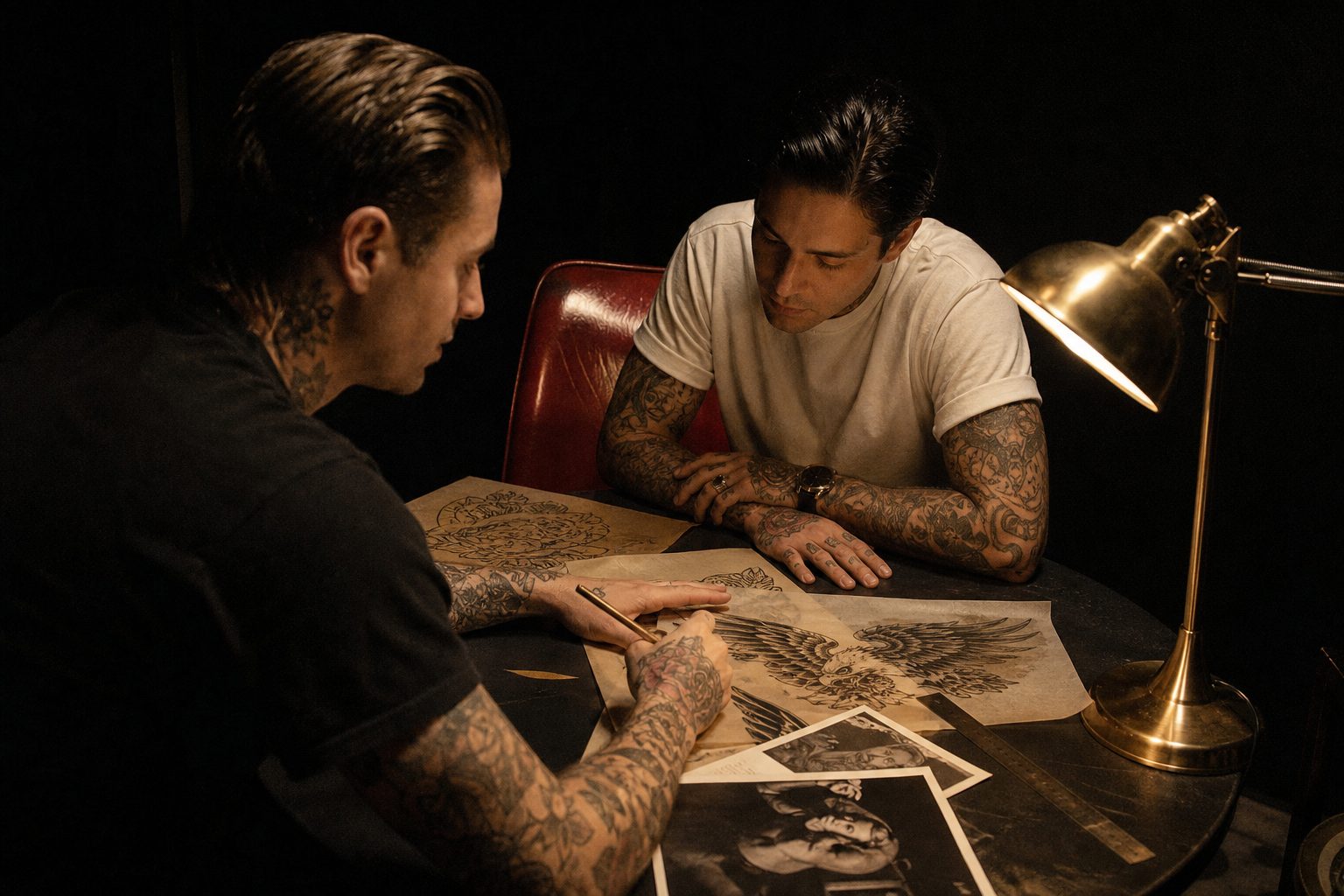
Practical guide
A step by step walkthrough of the consultation that turns a vague inquiry into a sized, placed, priced piece with a signed deposit and a stencil plan you can actually draw.
Comparison
Booth rent, percentage splits and hybrid deals pay out very differently once supplies, card fees and self employment tax come off the top. Here is the math on both, side by side.
Mistakes to avoid
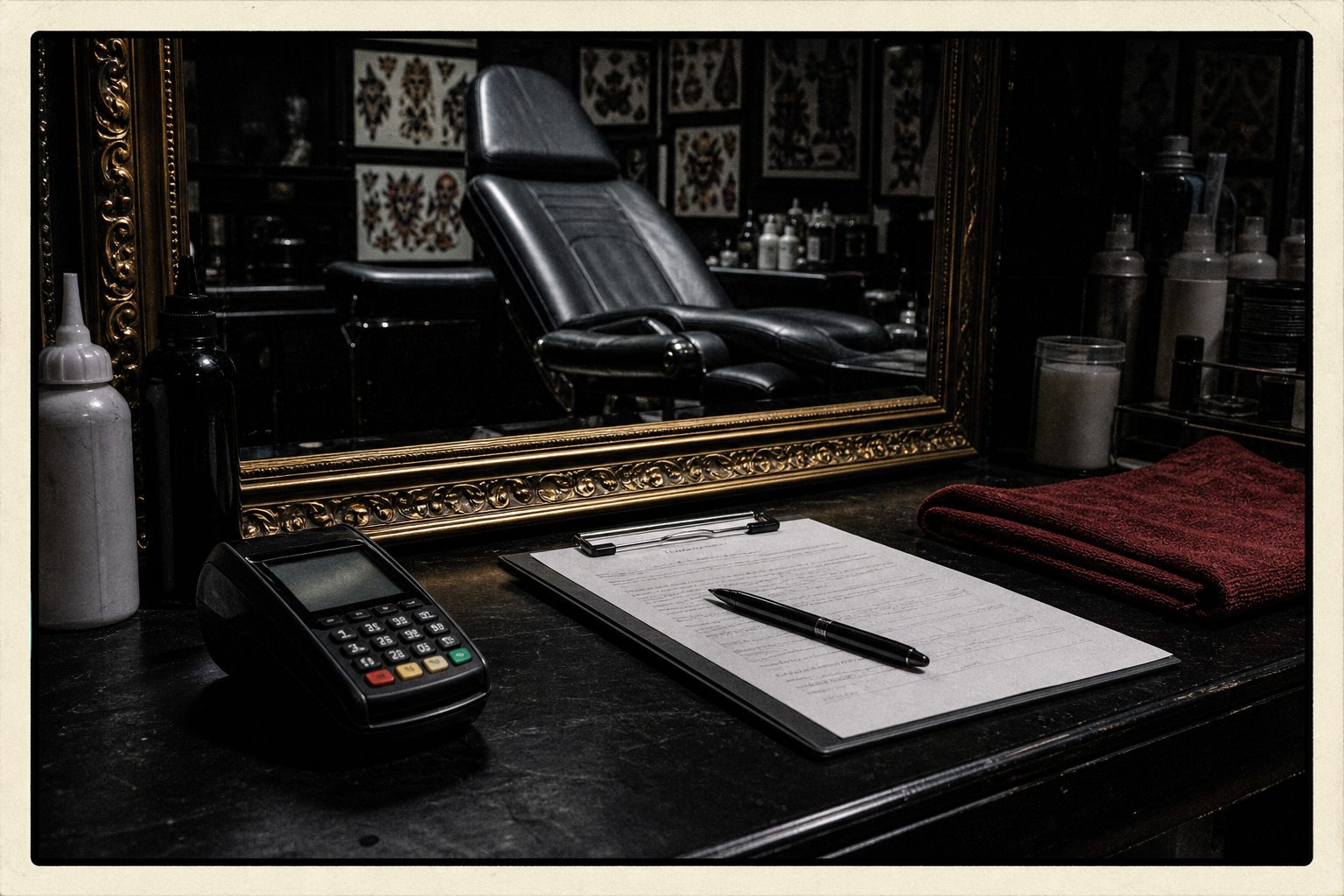
Vague terms, verbal reschedules and a deposit taken through the wrong payment channel are what lose a chargeback. Here is how to write terms that hold up when a client pushes back.
Book a walk through
Tell us how custom requests reach you today, screenshots and all, and we will build a working sheet from your own price floors while you watch. Walk throughs run about twenty five minutes, and we take them between appointments, evenings included, because that is when artists are free.
Prefer to write first? Email jimenezjulien42@gmail.com and you will hear back from a person, usually the same day.
One reply from a real person, normally within one business day. No autodialer, no sales sequence, and your address never goes on a list.