field report
Working a Tattoo Convention: Permits, Booth Costs and Setup
Temporary body art permits, booth fees, travel and a portable station that passes inspection. What a convention weekend actually asks of you, and what comes back after expenses.

 Ink and Ledger
Applying for a Temporary Body Art Permit
Most tattoo conventions require every artist working on-site to hold a temporary body art permit issued by the local health department. These permits are separate from your home studio's license and are tied to the city or county where the event is held. The process can take anywhere from a few days to several weeks, depending on the jurisdiction.
Start by contacting the convention organizer: most provide a packet or a link to the county health department's application. You'll usually need to provide a copy of your bloodborne pathogens certification, proof of a recent hepatitis vaccination, and your home shop's license. Some counties want a recent spore test result from your autoclave, even if you plan to use only pre-sterilized, single-use disposables.
Permits often come with a fee. This is typically a flat rate per artist, not per booth. The paperwork might ask for your planned work schedule and the list of products you'll bring. Be ready to show documentation at check-in: health inspectors at conventions can and do walk the floor, checking for permits and compliance.
For out-of-state artists, expect a little extra scrutiny. Some regions require a notarized affidavit confirming your training and current standing. Have digital copies of all paperwork ready. If you miss the application window, you risk not being allowed to work, even if you traveled across the country.
Keep reading: How to Run a Custom Tattoo Consultation That Ends in a Deposit
Booth Fees, Travel and What the Promoter Provides
Booth fees are the first expense most artists think about, but the real cost of a convention weekend adds up quickly. Promoters usually offer early-bird pricing several months in advance. A single-artist booth can cost less than a large studio setup, but location on the floor matters: a corner booth or a high-traffic aisle brings in more walk-ups, but often costs more.
Most booth fees include a table, two chairs, some pipe-and-drape dividers, and a listing in the convention guide or website. Electricity is sometimes extra. Some shows provide a basic sharps container and a roll of barrier film, but most expect you to bring your own PPE, disinfectants, and ink caps. Double-check the promoter's packet for what is included. It's easy to get caught short if you assume gloves or power strips are provided.
Travel is the next biggest line item. Planes, gas, tolls, and parking add up. Many artists share hotel rooms to keep costs down, and some conventions partner with nearby hotels for discounted rates. Don't forget daily food and drinks. If the convention center bans outside food, you'll be paying vendor prices for every meal.
Insurance is a must. Most shows require you to show proof of liability coverage. If your policy is tied to your shop address, look into a rider or a short-term event policy that covers you at the venue.
Packing a Portable Station That Passes Inspection
Packing for a convention is different from setting up at your home shop. Everything has to be portable, compact, and compliant with local health rules. Most inspectors want to see a cleanable, nonporous surface for each work area, and plenty of supplies for safe practice.
Furniture and Work Surfaces
Your massage table or tattoo chair should be vinyl or metal, with no rips or tears. Bring a lightweight folding table for your setup, avoid wood tops or fabric covers. Many artists use a non-slip cart or tray with raised edges, easy to wipe down between clients. Disposable covers for all surfaces are a must.
Supplies for Safe Work
Stock up on gloves, machine bags, clipcord sleeves, barrier film, and disposable razors. Bring enough for each session and a few extra in case of spills or contamination. Most inspectors want to see single-use items: bag your machines and wrap every bottle. Sharps containers should be labeled and never overfilled. Bring your own disinfectant wipes and sprays, as many venues do not supply these.
Power and Lighting
Extension cords and power strips need to be rated for the equipment you use. Tape down any cords to avoid tripping hazards. Portable LED lamps with adjustable arms are popular, overhead lighting at convention centers is often poor. Pack backup bulbs or batteries.
Waste Disposal
You'll need red biohazard bags for contaminated waste and separate containers for regular trash. Some venues offer central collection points, but be ready to store waste safely at your booth until disposal is allowed. Always bring your own tape and labels for bags.
Finally, pack backups for everything: machines, clipcords, power supplies, and cables. If something fails, on-site vendors might not have your exact replacement.
Keep reading: Booth Rent vs Commission Split: How Each One Pays a Tattoo Artist
Setup Day: Barriers, Power and Waste Disposal
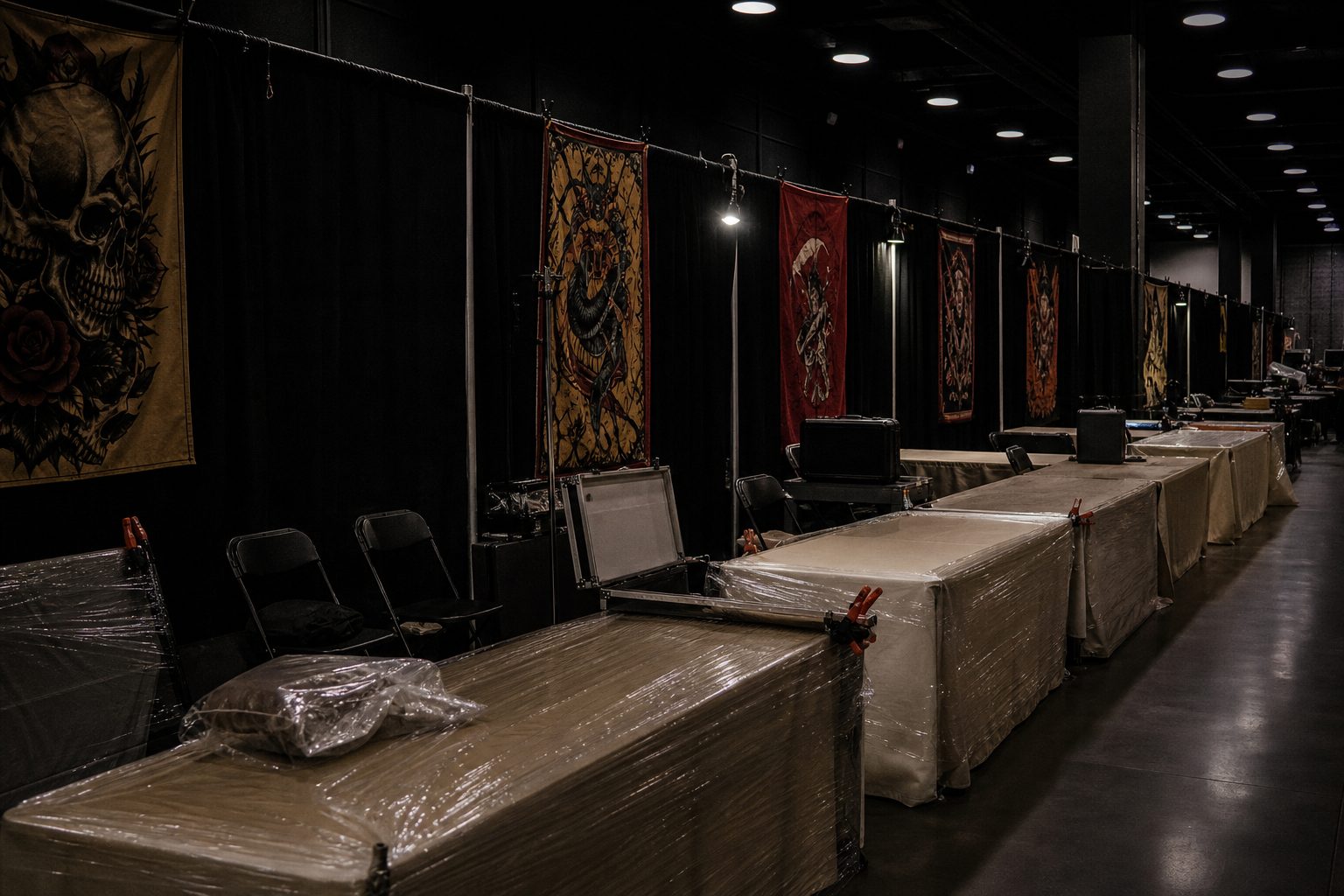
Load-in day at a convention runs on a tight schedule. Arrive early to claim your assigned spot and start setup. Health inspectors often walk through before doors open. They look for barriers, PPE, and safe storage of supplies.
Most booths are marked off with pipe and drape, but you'll need to create barriers between your work area and aisles. Some artists use portable screens, while others set up banners or tables as partitions. The goal is to keep clients and equipment protected from foot traffic.
Power is usually shared across rows of booths. Check that the outlet you're assigned is working before you set up your station. Keep all cords taped down and away from walkways to avoid tripping hazards. If you need adapters, bring them yourself, venue staff rarely have extras.
Waste disposal can be confusing at large shows. Find out where the nearest sharps drop-off and trash areas are. Some conventions collect biohazard containers at the end of each day, others expect you to take them home. Never leave sharps or contaminated waste in regular trash bins.
After setup, do a walk-through with gloves on, checking for missing supplies or contamination risks. Once inspections are complete, you'll be cleared to start working as soon as doors open.
Booking Walk Ups Versus Preselling the Weekend
Every artist faces the choice: fill the calendar before arrival, or keep spots open for walk-up business. Both strategies have risks and rewards, and the best approach depends on the show's location, size, and your own reputation.
Preselling Appointments
Preselling slots before the show gives structure to your weekend and guarantees income. Many artists post on social media months ahead, showing available time blocks and requesting deposits to hold a spot. Preselling works best for specialty or custom pieces that need advance design work. Clients know exactly when to show up, and you can pace your day.
The downside: you might miss out on spontaneous walk-up clients who are ready to get inked now. If a presold client cancels or no-shows, that time may go unfilled. Some artists double-book short pieces or keep a waitlist, but this can get tricky if sessions run long.
Walk-Up Business
Walk-ups are common at busy shows in major cities. Many attendees come looking for their first tattoo or a flash piece. A full flash sheet or a set of pre-drawn designs makes it easy to book clients on the spot. Walk-up clients are less likely to flake, but the average ticket is often smaller than an all-day custom piece.
The risk: a slow show or a low-traffic booth can mean hours without work. Artists who rely on walk-ups need to be comfortable making a quick sale and turning designs around fast. Some bring a helper to handle line management and cash.
Hybrid Approach
Most seasoned artists use a hybrid system: presell a handful of large pieces to anchor each day, then fill open time with walk-up clients. This balances guaranteed income with the flexibility to take on new business. Publicizing your available times and deposit policy on social media and at your booth, on a sign or tablet, helps manage expectations.
See how StencilIntake handles this for tattoo studios
Working the Floor While Your Chair Is Full
A busy booth is good for business, but it can quickly become chaotic. Managing your schedule, client paperwork, and aftercare instructions while keeping the work area clean takes practice.
Paperwork and Payments
Every client needs to fill out a waiver, ID check, and health disclosure. At some conventions, health inspectors require you to keep these forms accessible for review. A clipboard or tablet simplifies intake, but paper forms pile up fast. Many artists use digital forms to cut down on clutter.
Collecting payment is another pinch point. Most artists accept cash or mobile payments. Make sure you have a float of small bills for change. Clearly post your rates, deposit policy, and payment options. If you're busy with a client, a helper can answer questions and handle simple sales, but many artists work alone.
Managing the Client Queue
Some booths draw crowds, especially during peak hours. A sign-up sheet or a number system can help keep walk-ups organized. For presold appointments, keep a clear schedule posted at your station. If you're running behind, communicate with waiting clients, most are understanding if you keep them in the loop.
Aftercare and Follow-Up
Aftercare instructions matter, especially for out-of-town clients. Provide clear written or digital aftercare with every tattoo. Some artists hand out printed sheets, while others text or email instructions. This cuts down on questions later and helps protect your reputation.
Between sessions, sanitize your station thoroughly. Watch for glove changes, wipe down all surfaces, and replace any contaminated items. If you're alone, build in buffer time to handle cleaning and paperwork.
Adding Up the Weekend After Expenses
When the weekend winds down, it's time to tally the numbers. Start with your gross receipts: cash, mobile payments, and deposits collected. Subtract booth fees, travel, hotel, meals, supplies, insurance, and permit costs. Don't forget to factor in lost income for days you closed your home studio.
Some artists make the trip to break even or for exposure. Others pull in more in a weekend than they would in a week at home. Either way, the true value comes from building new client relationships and growing your portfolio. Repeat business from convention clients often turns into bigger custom projects down the road.
Many of the weekend's headaches come from juggling paperwork, deposit tracking, and aftercare for new clients you may never see again. Tools that streamline custom intake, reference uploads, deposit handling, and aftercare delivery can make the next convention smoother for both artists and clients.

How to Run a Custom Tattoo Consultation That Ends in a Deposit
A step by step walkthrough of the consultation that turns a vague inquiry into a sized, placed, priced piece with a signed deposit and a stencil plan you can actually draw.
Booth Rent vs Commission Split: How Each One Pays a Tattoo Artist
Booth rent, percentage splits and hybrid deals pay out very differently once supplies, card fees and self employment tax come off the top. Here is the math on both, side by side.
Tattoo Deposit Policies That Fail When a Client Disputes a Charge
Vague terms, verbal reschedules and a deposit taken through the wrong payment channel are what lose a chargeback. Here is how to write terms that hold up when a client pushes back.