numbers and benchmarks
What One Hour in Your Tattoo Chair Costs Before You Set a Rate
Rent, insurance, needles, ink, card processing and the hours you are not tattooing all land in one number. Work out your true cost per chair hour before you quote an hourly rate.

 Ink and Ledger
Counting Your Real Tattooing Hours in a Year
How many hours do you actually spend with a machine in your hand? Most artists assume a forty-hour week, but few reach that number in booked tattoo sessions. Your paid chair time is not the same as the hours you're at the studio. Cancellations, reschedules, and gaps between appointments all chip away at billable hours.
Start by counting the number of days you plan to work in a year. Subtract planned vacations, holidays, and common sick days. Multiply that by your average number of sessions per day. Even in a busy shop, a common pattern is four to five tattooing hours in an eight-hour shift, after you factor in setup, breakdown, and consultations.
If you keep records, look at your calendar for the last twelve months. How many days were you tattooing? What was your average number of paid hours per day? Use those numbers as your starting point. This is the foundation for every other calculation in your pricing model.
Keep reading: Working a Tattoo Convention: Permits, Booth Costs and Setup
Fixed Costs: Rent, Insurance, Permits and Subscriptions
Fixed costs are the bills you pay whether you tattoo or not. These include studio rent, insurance, licenses and health permits, and any subscription services your shop uses. Add to that your share of utilities if you're not the sole tenant, and any equipment leases.
Rent and Utilities
Start with your studio rent. If you rent a chair, use your share. If you run the shop, include the full lease and divide by the number of artists if appropriate. Add your monthly utilities, electric, water, and trash, then multiply to get a yearly figure.
Insurance and Permits
Most states require liability insurance for tattoo shops, plus coverage for theft or fire. Health permits and business licenses often renew annually. List each one, note the renewal cost, and total for the year. If you use a subscription service for digital consent forms or appointment booking, include that as well.
Adding all fixed costs together gives you the base you need to cover before any profit or personal pay. Divide this annual number by your projected tattooing hours in the year to get the fixed cost per chair hour.
Variable Costs per Session: Needles, Ink, Barriers, Laundry
Unlike rent, these costs depend on how many tattoos you do. Each session burns through a set of consumables. Some artists keep a detailed supply log, but you can also estimate based on your average setup.
Needles, Cartridges, and Tubes
Every appointment requires fresh needles or cartridges, sometimes several per session. If you work with multiple machines or swap liners and shaders, your supply use climbs. Each set adds up over time.
Ink and Pigments
Ink cost varies by piece. Small tattoos use less, sleeves and back pieces take more. Some artists measure out their average per-session use. If not, estimate by dividing your monthly ink purchases by the number of sessions completed.
Barriers, Gloves, and Wraps
Wraps, dental bibs, machine bags, clip cord covers, and nitrile gloves all go in the trash after every client. Add razors, ointments, and paper towels. Each bit seems cheap, but together these supplies can exceed the cost of ink in a busy studio.
Laundry and Cleaning Supplies
If you use reusable aprons or towels, add the cost of detergent and machine time. Disposable alternatives are easier to track but can run higher per use. Surface disinfectants and sharps disposal are also part of every session's expense.
Once you have a per-session or per-hour variable cost, add this to your fixed cost per chair hour. This is your true operating expense to deliver one hour of tattoo work.
Keep reading: How to Run a Custom Tattoo Consultation That Ends in a Deposit
Card Processing and Deposit Fees
Most clients pay by card. Each swipe or tap comes with a fee, usually a percentage of the total plus a small flat amount. Over a year, these charges can eat up a fair share of your revenue.
Card Processing Percentage
If you use Square, Stripe, or a similar service, you pay a cut of every transaction. Multiply your total annual income by your processor's rate to estimate your yearly processing fee. For smaller shops, this is often one of the top five annual expenses.
Deposit Handling
Many shops require deposits to reduce no-shows. Some platforms charge for deposit collection, either as a flat fee or a percentage. If you refund deposits for cancellations, you may eat the processing fee twice. Be sure to factor these charges into your cost calculations.
If you accept apps like Venmo or PayPal, check their fee structures. Some peer-to-peer services are now enforcing business fees on high-volume accounts.
Self Employment Tax and Quarterly Estimates
Independent artists and most shop owners pay self-employment tax. This covers Social Security and Medicare, which are not withheld like they are in a regular paycheck. Many are surprised to find how much this adds to their annual bills.
Expected Tax Rate
The self-employment tax rate is set by the IRS and applies to net income, which is your revenue minus business expenses. Most artists pay this alongside federal and state income tax. If you do not set aside a portion throughout the year, you may face penalties or a large bill come tax season.
Quarterly Estimates
Most self-employed workers are required to pay estimated taxes every quarter. Missing these deadlines can result in fines. If you do your own accounting, mark the calendar and budget for these payments four times a year.
When setting your hourly rate, remember: every dollar you earn is not a dollar in your pocket. Calculate your expected tax burden and add that to your minimum needed per chair hour.
See how StencilIntake handles this for tattoo studios
Unpaid Hours: Drawing, Consults, Email and Cleaning
Not every hour you spend at the studio is billable. Custom work often means hours spent drawing and revising designs before a client ever sits down. Consultations, emails, and messages add up quickly, especially for artists who take custom commissions.
Consultations and Prepping
Initial consults rarely get billed at your full tattoo rate, if at all. Some artists charge a flat fee to cover time spent with the client before the actual tattoo, but many offer this free as part of the service. Add up the average number of unpaid consult hours per week.
Design and Drawing Time
Custom pieces mean research, sketching, and revisions. If you spend three hours drawing for every five hours tattooing, your hourly rates need to reflect that invisible labor. Track your prep time for a month to get a realistic average.
Cleanup and Communication
Studio cleaning is not glamorous, but it is required. Breakdown and disinfecting after each client are nonnegotiable, and deep cleaning is expected by most local health departments. Time spent emailing and scheduling is also unpaid. All these hours reduce your actual earnings per working week.
To find your real hourly wage, add up all unpaid hours in a month and divide by the number of paid chair hours. The result shows how much extra work goes into each booked hour.
Turning Total Cost Into a Floor Rate
After totaling fixed costs, average variable costs, payment fees, tax obligations, and unpaid hours, you have the real amount it takes to keep your studio running. This is not yet your hourly rate: this is your floor, the minimum you must make per chair hour to cover costs and pay yourself.
Example Calculation
If your fixed costs add up to $18,000 per year, and you work 1,000 paid chair hours, that's $18 per hour. If consumables and supplies average $12 per session, card processing runs five percent, and you spend one unpaid hour for every two hours tattooing, your floor rate climbs quickly. Add a reasonable margin to cover taxes and savings for equipment replacement.
Do not forget to include what you need to live on. Your take-home pay, retirement savings, and sick days should all be supported by your rates. Undercharging puts pressure on your health and your business. Regularly review your numbers and adjust as costs change or your schedule shifts.
Day Rates, Piece Pricing and Shop Minimums
Hourly rates are not the only model. Many artists set a day rate for large pieces, a flat fee for small tattoos, or a shop minimum to cover basic costs. Each approach has its own advantages and risks.
Day Rates
A day rate works well for sleeves and back pieces that fill the calendar. Clients know the cost up front, and you can plan your workflow. Calculate your day rate by multiplying your floor hourly rate by the number of tattooing hours you expect in a typical day, plus some margin for breaks and prep.
Piece Pricing
For flash or common designs, piece pricing can be easier to explain and justify. Use your average time spent, plus a buffer for setup, breakdown, and any custom tweaks. The key is to avoid underestimating the time required, especially if revisions or touch-ups are common.
Shop Minimums
A shop minimum keeps you from losing money on small walk-in jobs. It should cover at least your fixed costs per hour, plus all consumables and processing fees. Most shops set a minimum to ensure every session is profitable, even if the tattoo is tiny.
However you price, transparent intake and clear estimates help clients understand your rates. Online consultation tools that let clients upload references, pay deposits, and receive aftercare instructions can save hours of unpaid admin time and help you hit your target hourly income.
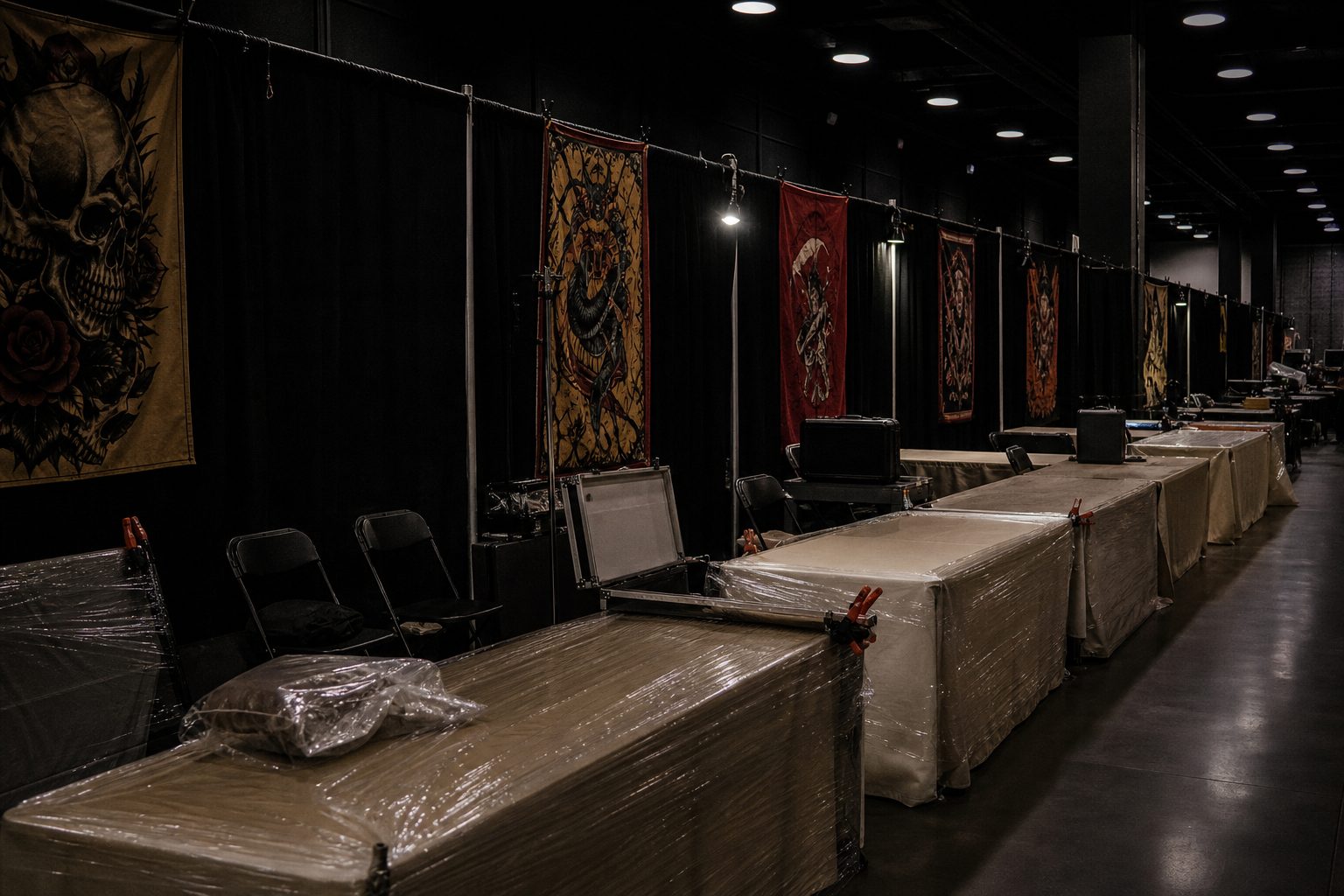
Working a Tattoo Convention: Permits, Booth Costs and Setup
Temporary body art permits, booth fees, travel and a portable station that passes inspection. What a convention weekend actually asks of you, and what comes back after expenses.

How to Run a Custom Tattoo Consultation That Ends in a Deposit
A step by step walkthrough of the consultation that turns a vague inquiry into a sized, placed, priced piece with a signed deposit and a stencil plan you can actually draw.

Booth Rent vs Commission Split: How Each One Pays a Tattoo Artist
Booth rent, percentage splits and hybrid deals pay out very differently once supplies, card fees and self employment tax come off the top. Here is the math on both, side by side.